Designing an end-to-end unlisted share trading platform to help the business scale
An unlisted share trading platform that lets investors discover pre-IPO companies, invest in a few taps and track every holding in one place.
Why we started the project
SN Capital buys and sells pre-IPO and unlisted shares for investors. Customers came through referrals and a form on the website, and from there a relationship manager ran every deal by hand: the price, the documents, the payment and the share transfer.
Customers through the website: only 1–5%
The demand existed, and so did the trust in the RMs. The limit was that every deal needed a person to carry it from start to finish.
Project Goal
Grow beyond referrals without adding an RM for every new investor. Let investors research, buy, sell and track on their own, and keep a person for the moments that need one.
Before the platform · from SN Capital's operations team
Seven steps, almost all of them offline
There were no old screens to audit, because almost nothing happened on a screen. So I mapped a deal from first interest to shares in a demat account, with the operations team who ran it, and marked where investors got stuck.
- The website only collected a form. No companies, no prices, nothing to judge an investment by. The sales conversation came before the investor had formed a view.
- Prices lived in calls. Each quote was given one-to-one, so an investor had nothing to compare it with and nothing to refer back to.
- Money moved on trust alone. A high-value transfer, made on a person's say-so, with no total, receipt or protection on screen.
- Every update depended on the RM. The RM kept the record of each deal and followed up with every client, one call at a time.
- Selling was harder than buying. Sellers had no idea whether anyone wanted their shares, or at what price.
- Growth meant more calls. Every deal needed the team, so the business was capped by RM time, not by demand.
What investors, the team and the market told me
Investors
- They wanted to browse before KYC, not hand over documents just to see a price.
- Selling felt harder than buying.
- The wait after paying caused anxiety. No updates meant chasing the RM.
- They valued transparency and proof.
The operations team
- Only 1–5% of visitors ever made contact.
- A deal took 3–5 days, with manual work at every step.
- Trust and pricing drove most drop-offs.
Other platforms
- Buying was digital, selling mostly wasn't.
- Fees were often unclear until late in the order.
- Tracking was thin after the payment.
- None balanced depth with simplicity. They were either a brochure or a trading terminal.
Conversations with the operations team and SN Capital's stakeholders · interviews with three investors · a review of other unlisted-share and investing platforms
What I designed within
After all of this, one thing was clear.
Interest wasn't the problem. Confidence was: investors needed to research a company and trust its price before paying, and to see where their deal stood after.
- Research first · Let anyone study a company and its price before asking for anything.
- One honest price · Show the price and the full cost before any payment.
- Every step visible · What's done, what's next and who acts, without a call.
- A person when it matters · Keep the RM one tap away at high-stakes moments.
From "Just interested" ›››"Invested"
I split the platform into four jobs an investor does, and designed each so it works without a call.
A stock page that earns the order
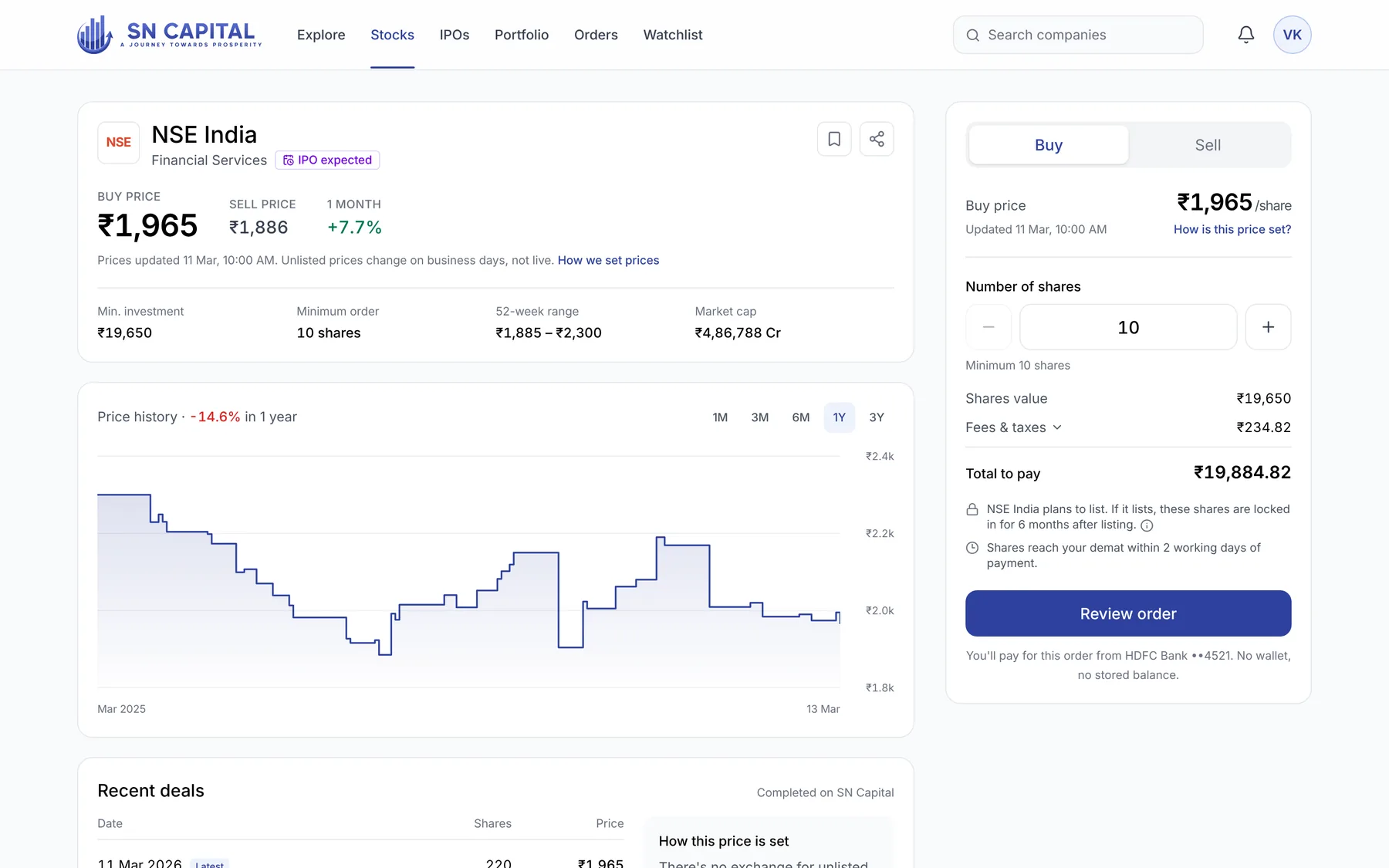
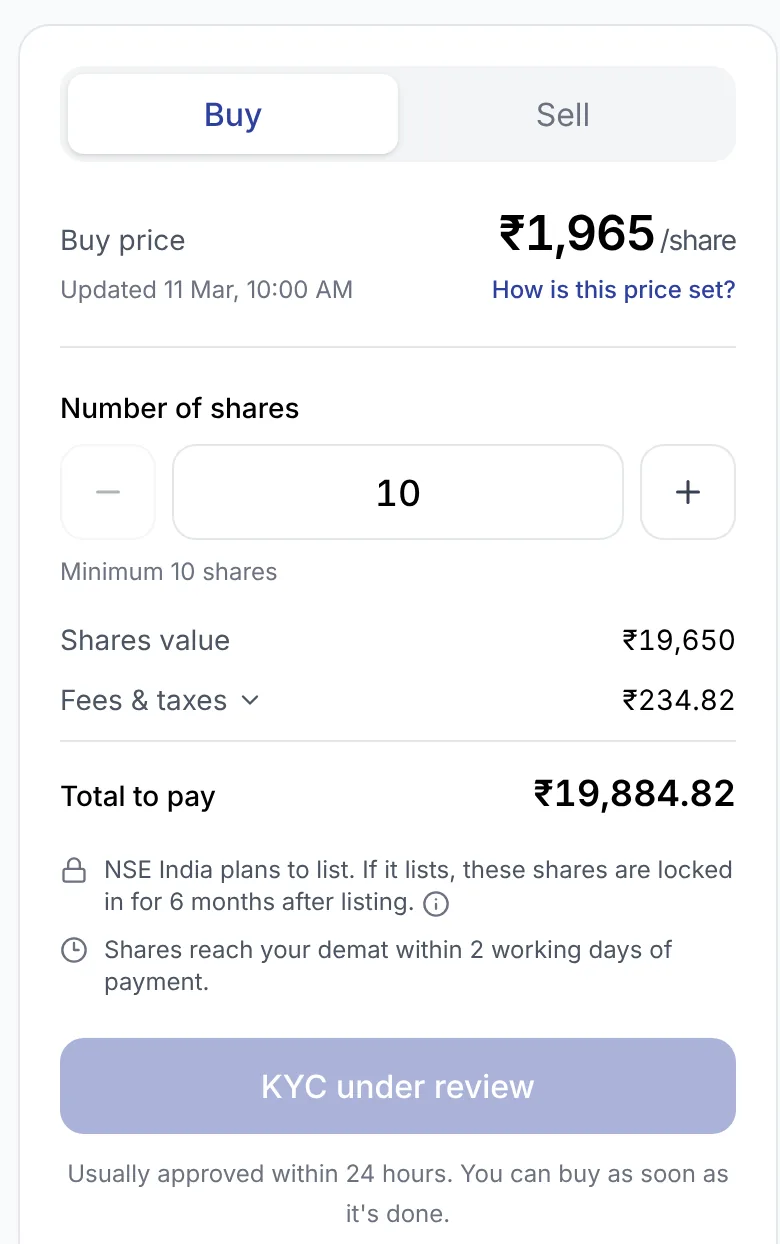
This is where an investor decides. The page answers "is this price fair, and what am I getting into?" before the Buy button asks for anything.

On desktop, the order sits beside the research
- The total, not the price. Shares value, fees and taxes, and the total to pay update as the quantity changes.
- What happens next, before it happens: the 6-month lock-in if the company lists, and shares in the demat within 2 working days.
- "No wallet, no stored balance." One line under the button says where the money comes from.
One review, one payment, a receipt
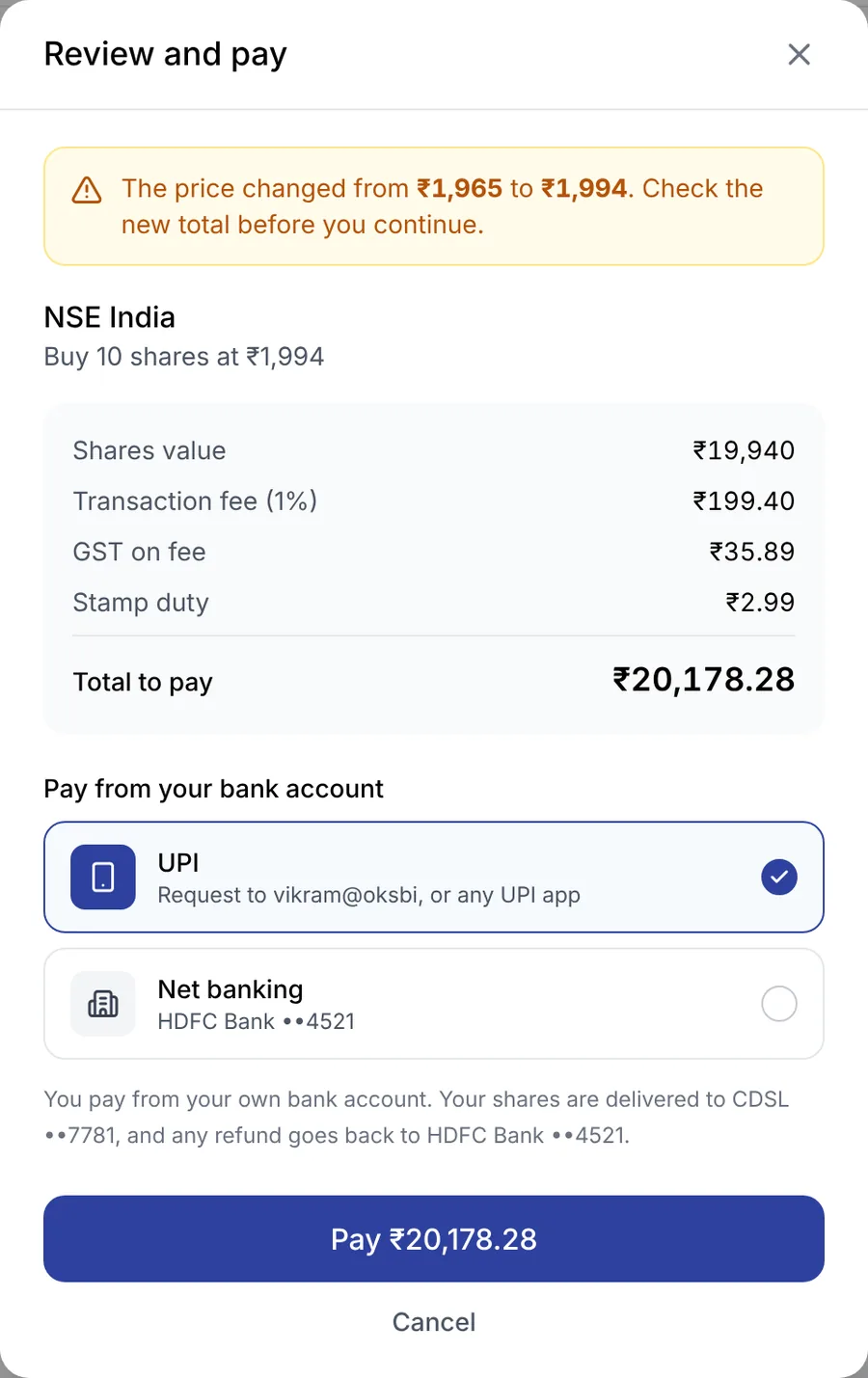
The old process asked for a bank transfer on a phone call. The new one shows the risks once, itemises every rupee, and confirms where your shares are going.
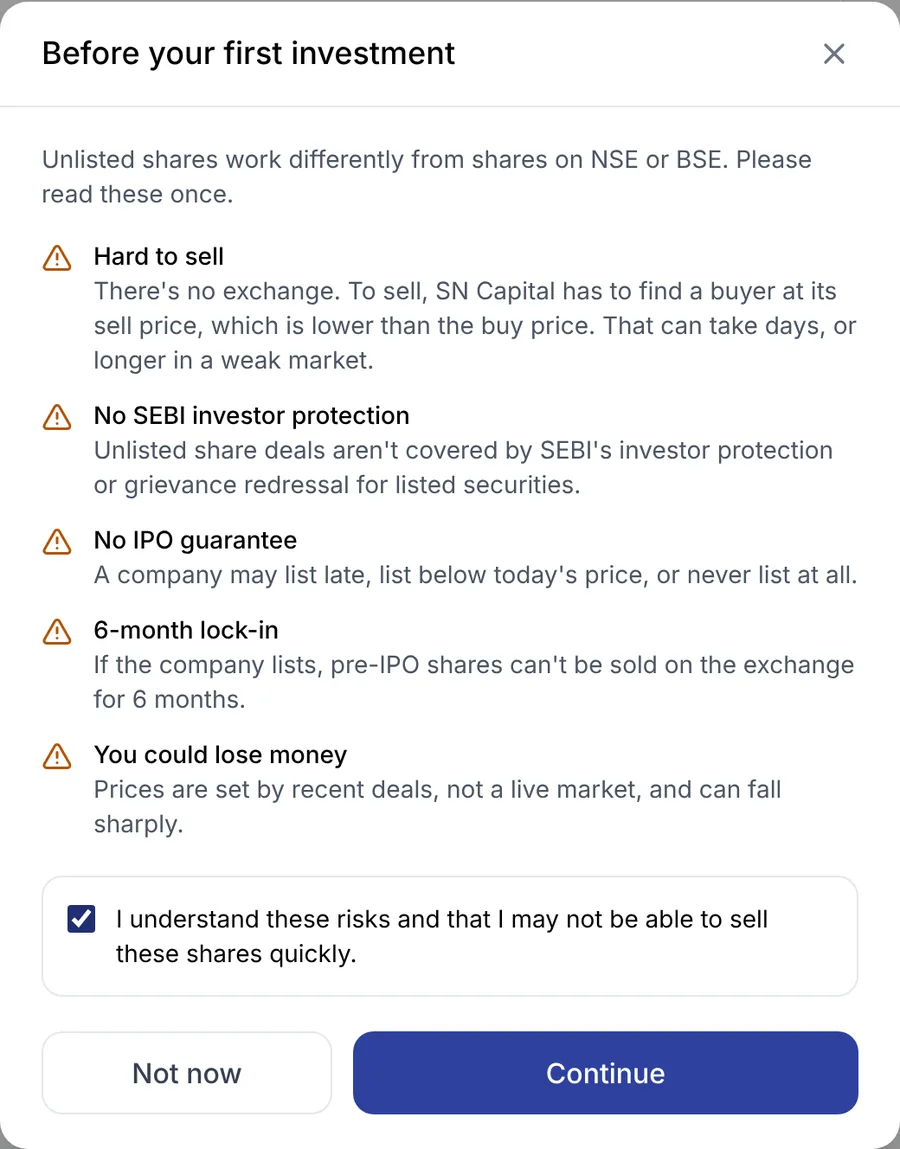
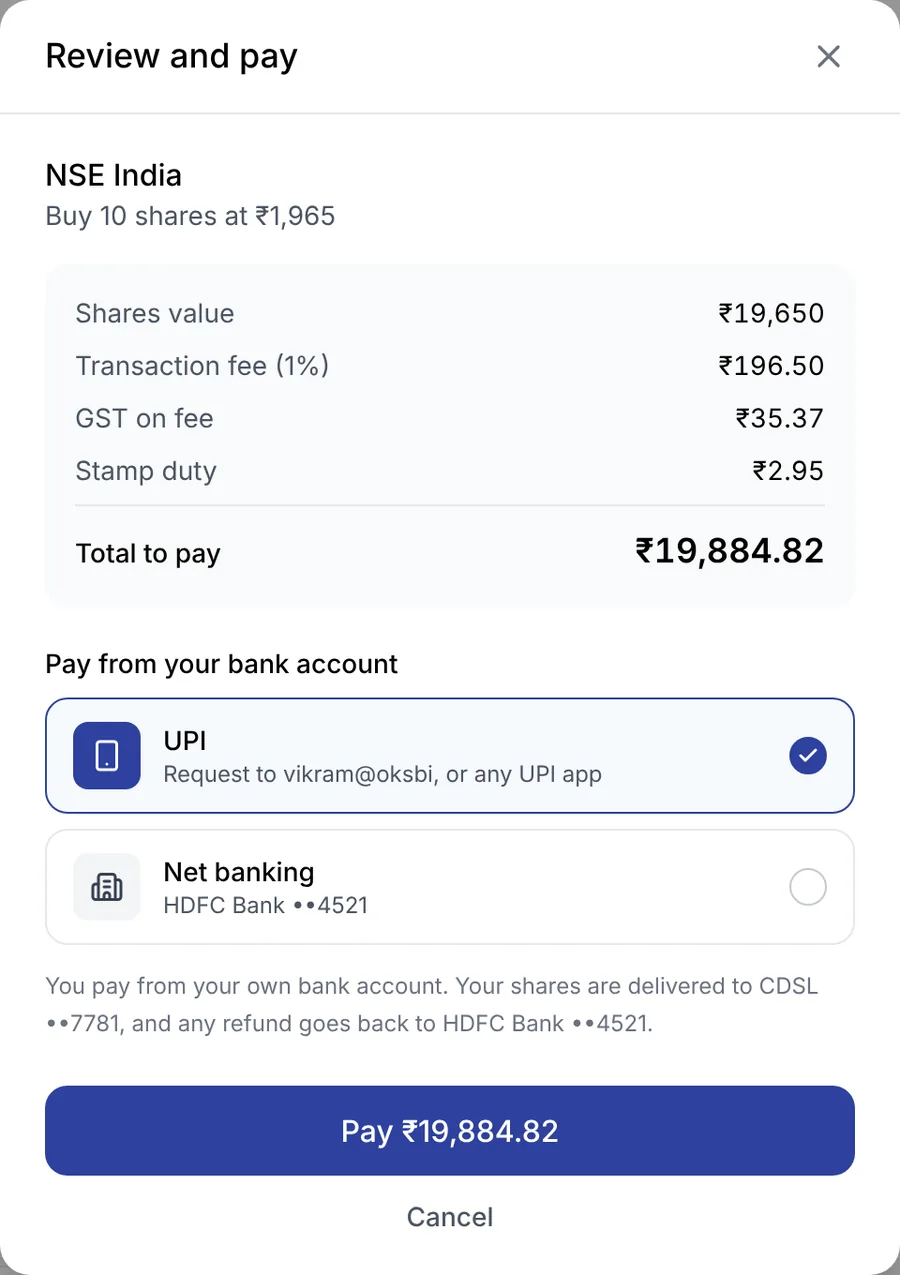
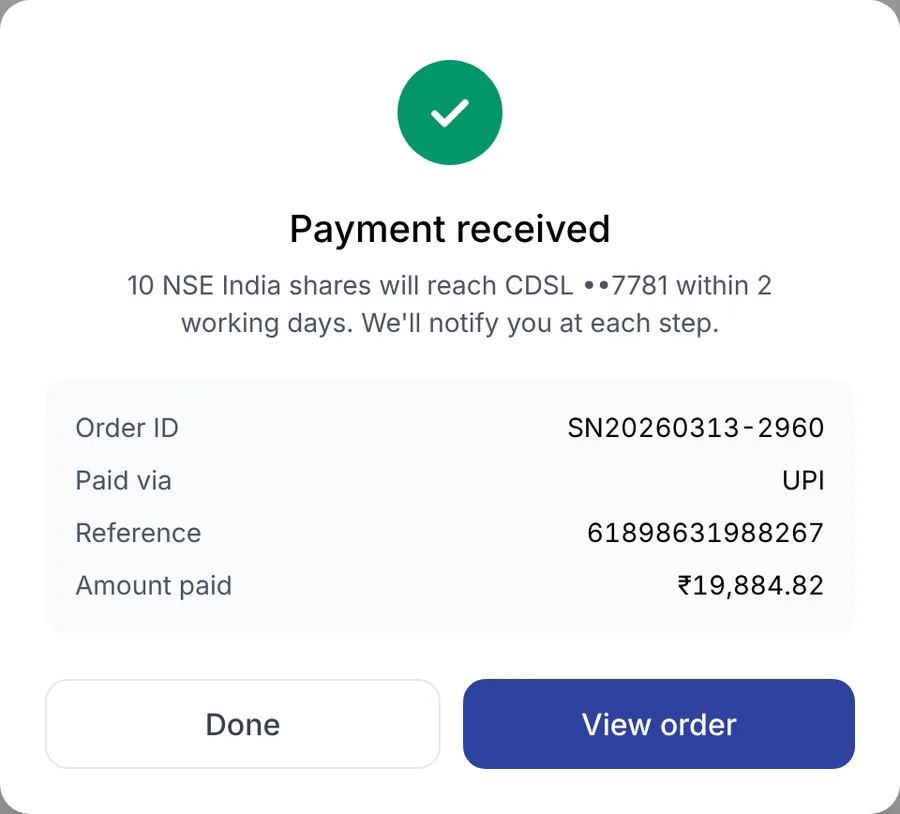
No wallet. Pay per order.
Most investing apps keep a balance you top up. For SN Capital that would mean keeping customer money between deals. Instead, each order is paid from the investor's own bank account when it's placed, and any refund goes straight back to the account that paid. It costs a step on repeat purchases, and removes a whole category of risk for the business and the investor.
Browse freely, verify when you're ready to buy
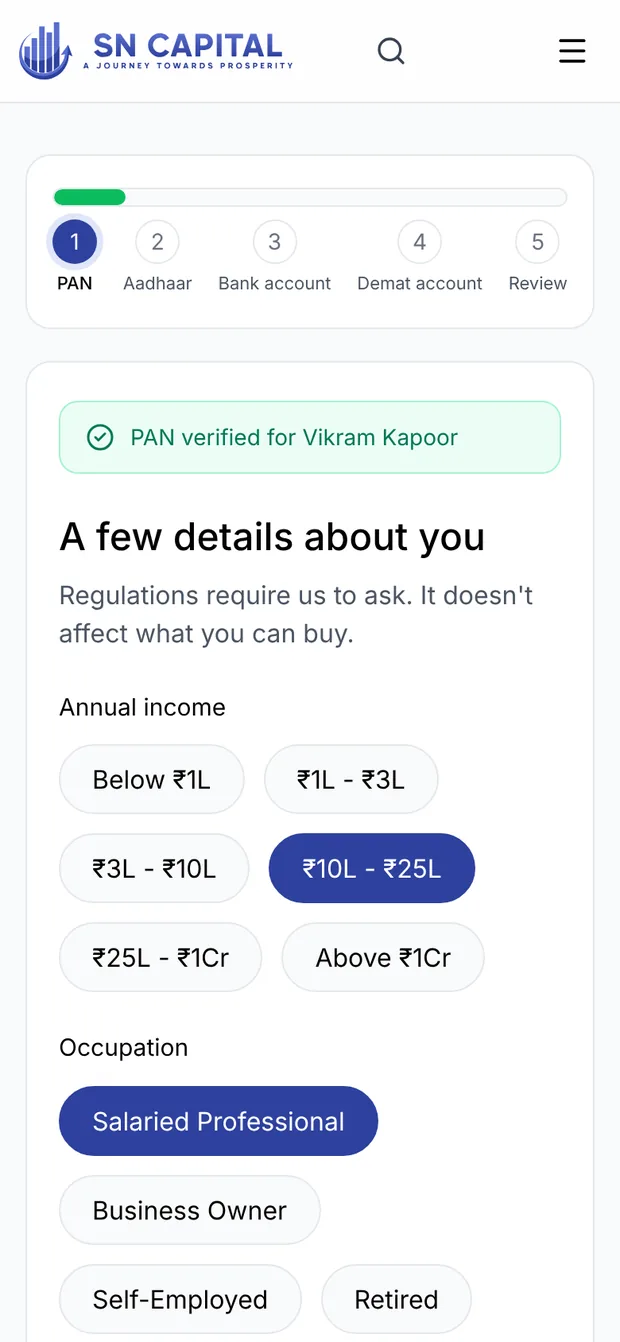
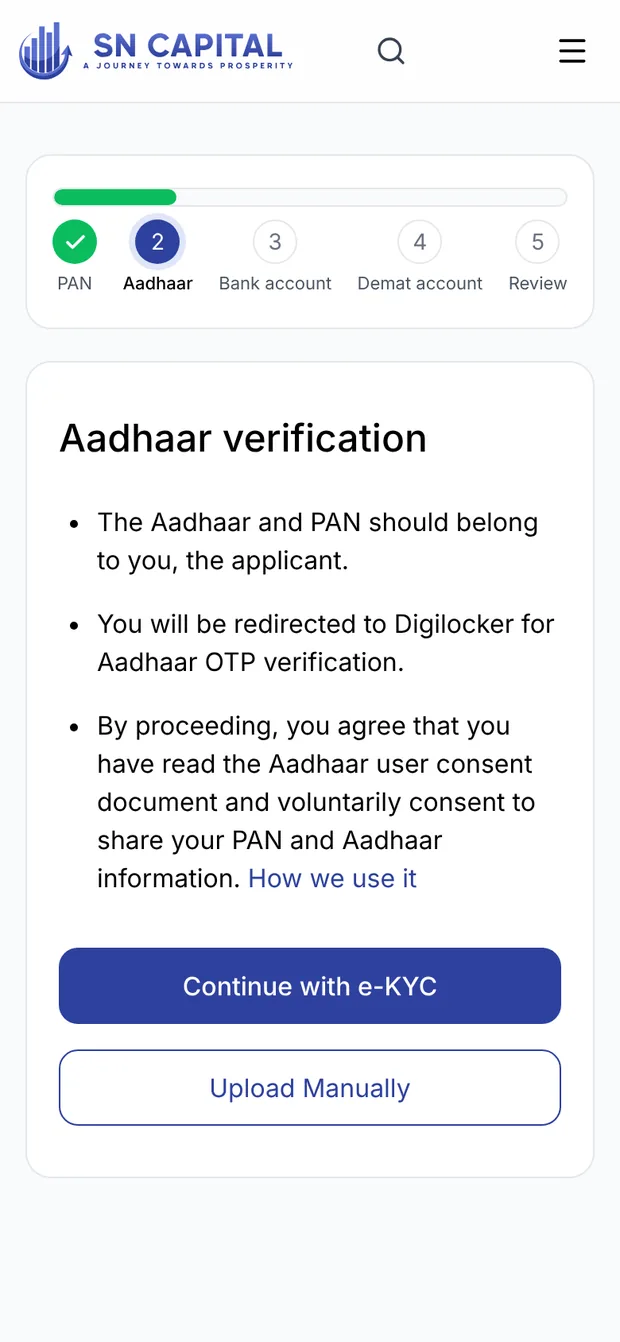
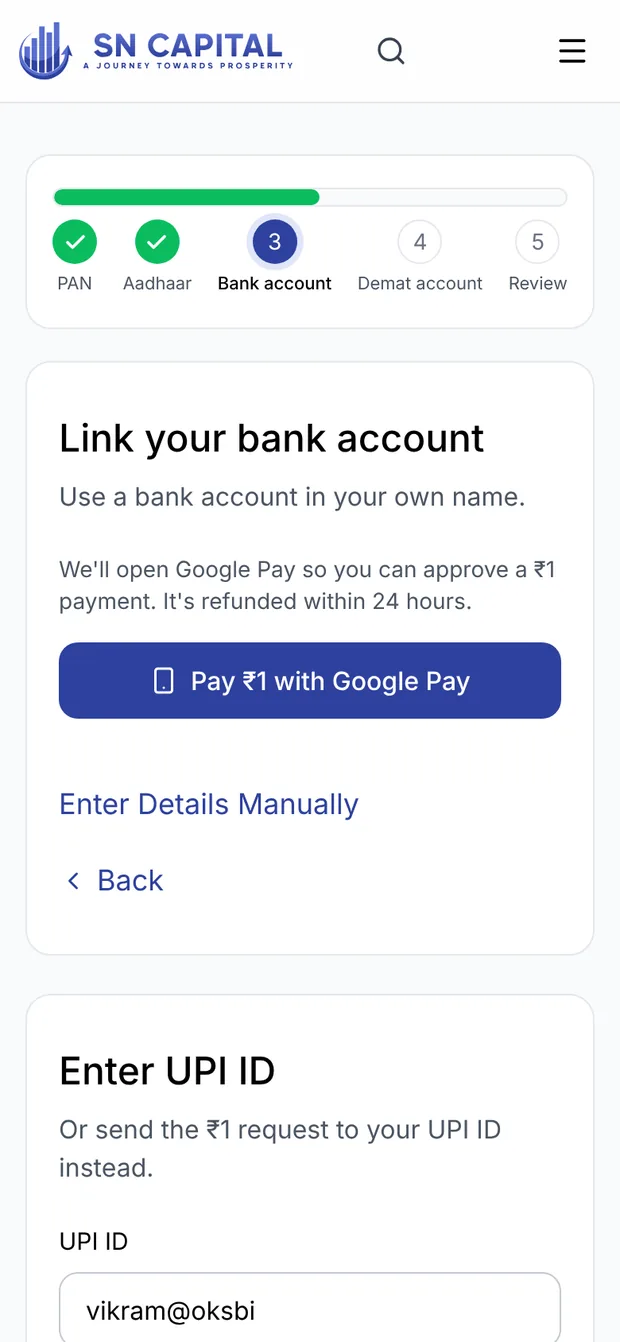
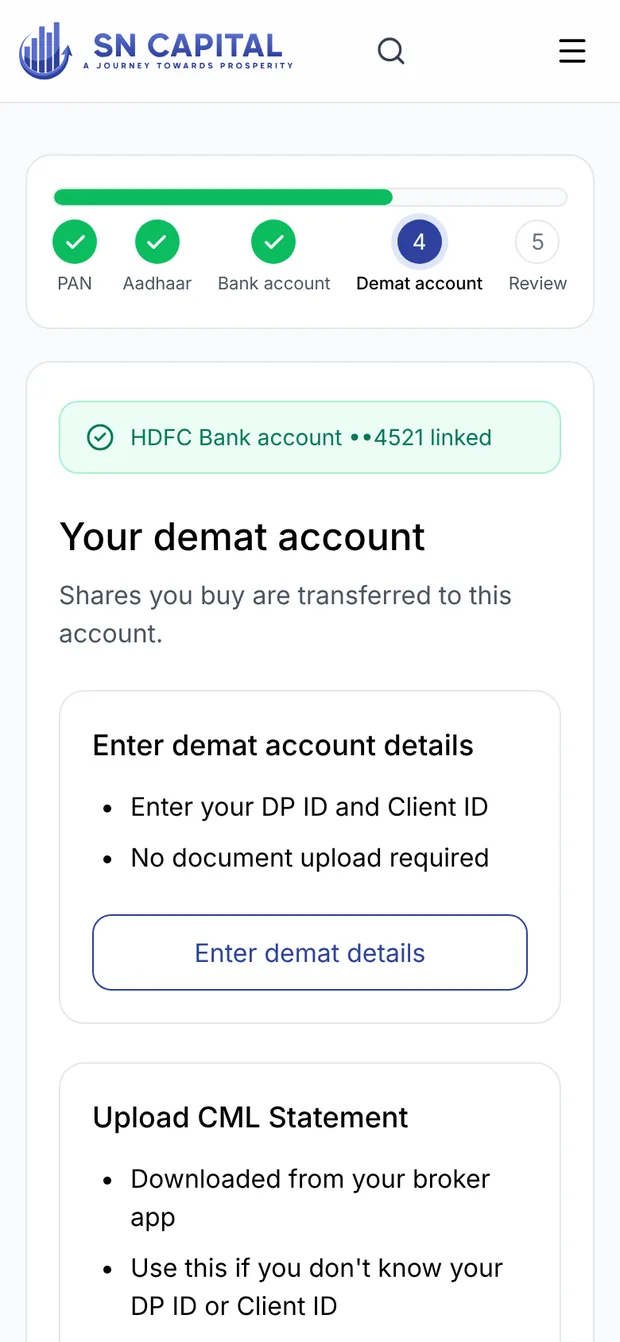
Investors told me they wanted to browse before doing KYC. So verification waits until there's intent, and then it's one flow with progress saved at every step.
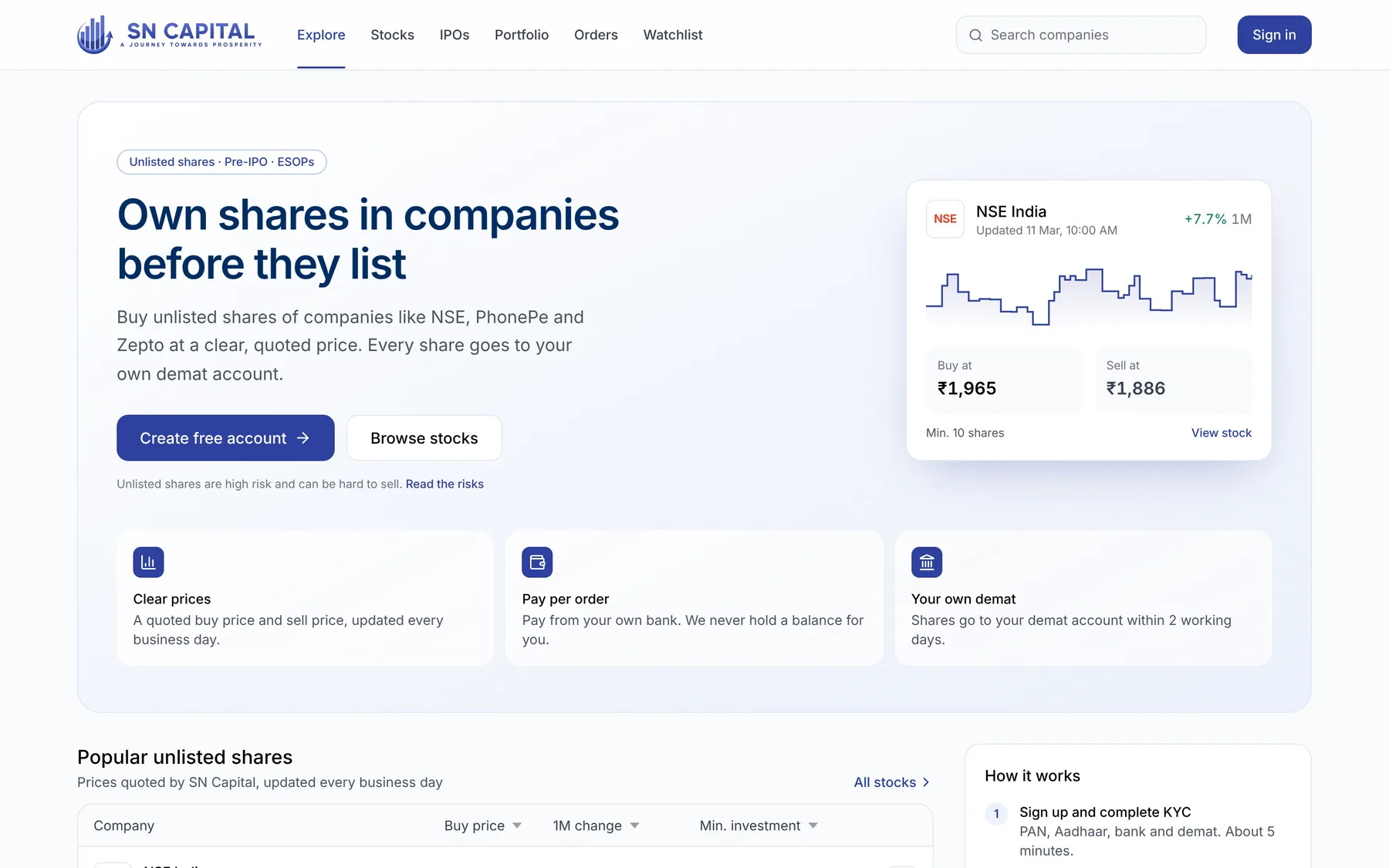
No account needed to look around
Companies, prices, recent deals, IPO plans and past listings are all open. Sign-in is a mobile number and a one-time code, asked for only when someone wants to buy, sell or save a watchlist.
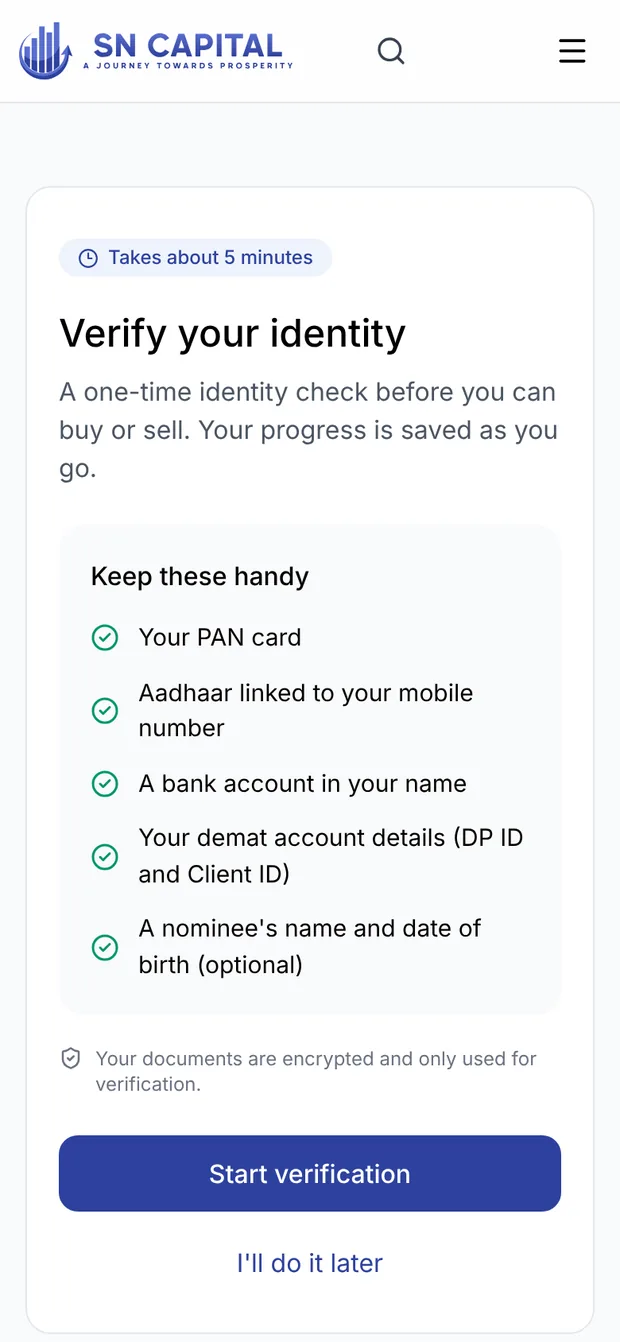
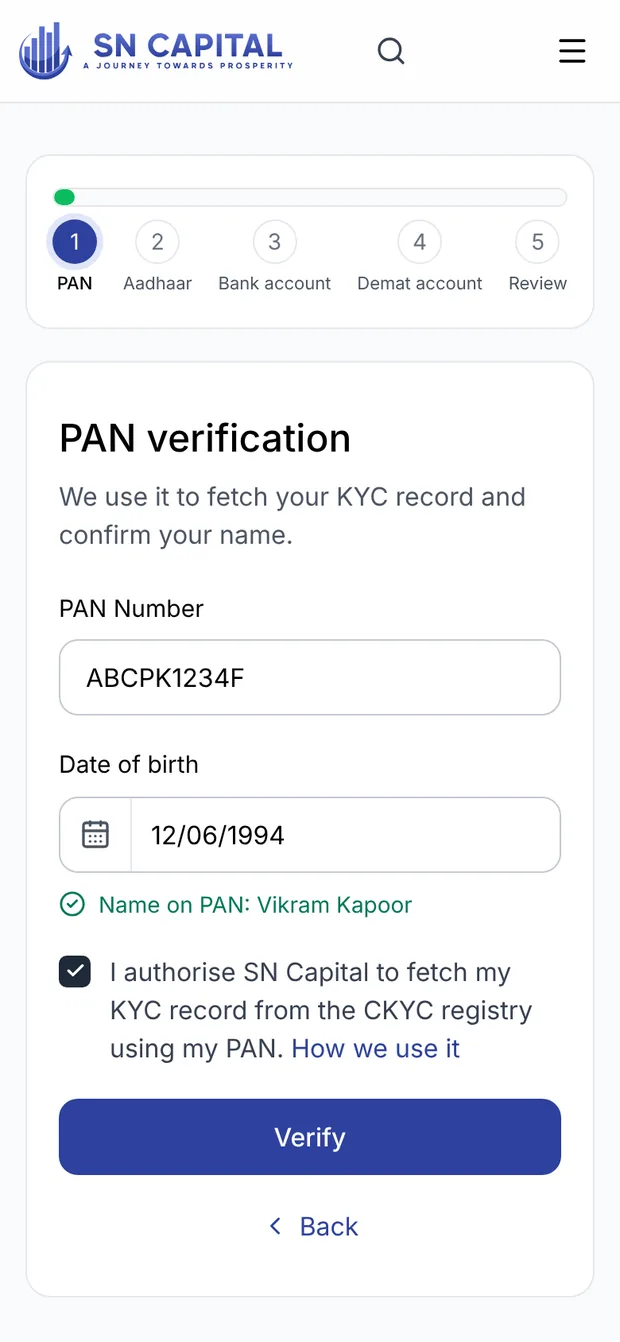
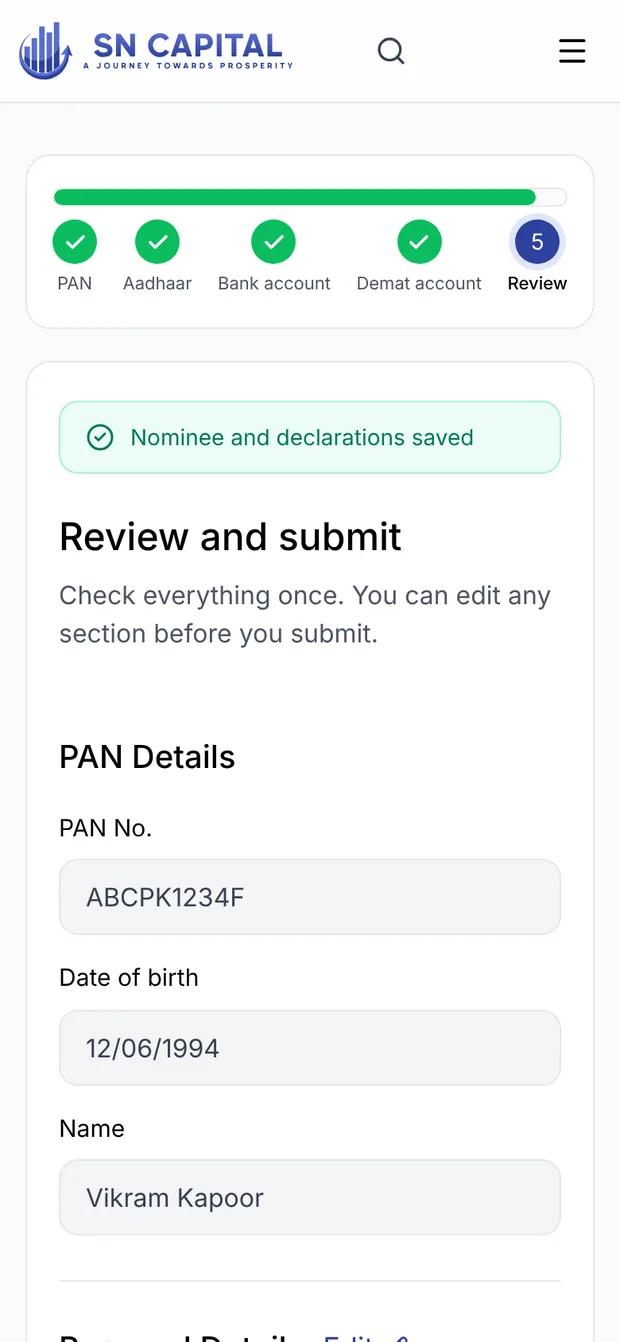
Under review, but never stuck
The investor can keep browsing and build a watchlist straight away.
Buy buttons say "KYC under review", so it's clear why they're waiting. Usually done within 24 hours.
The team confirms what can't be automated, like the demat details.
Buying unlocks, and the investor is notified by SMS and email.
A plain reason, and only that one section reopens. Everything else stays filled in.
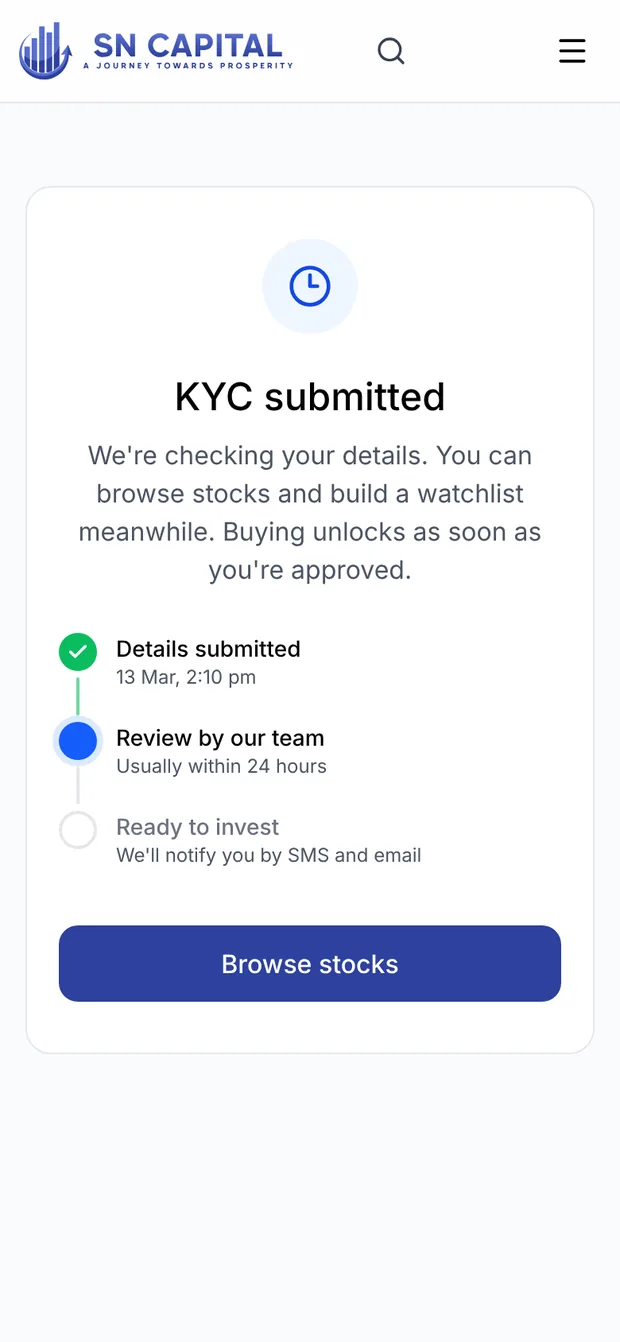
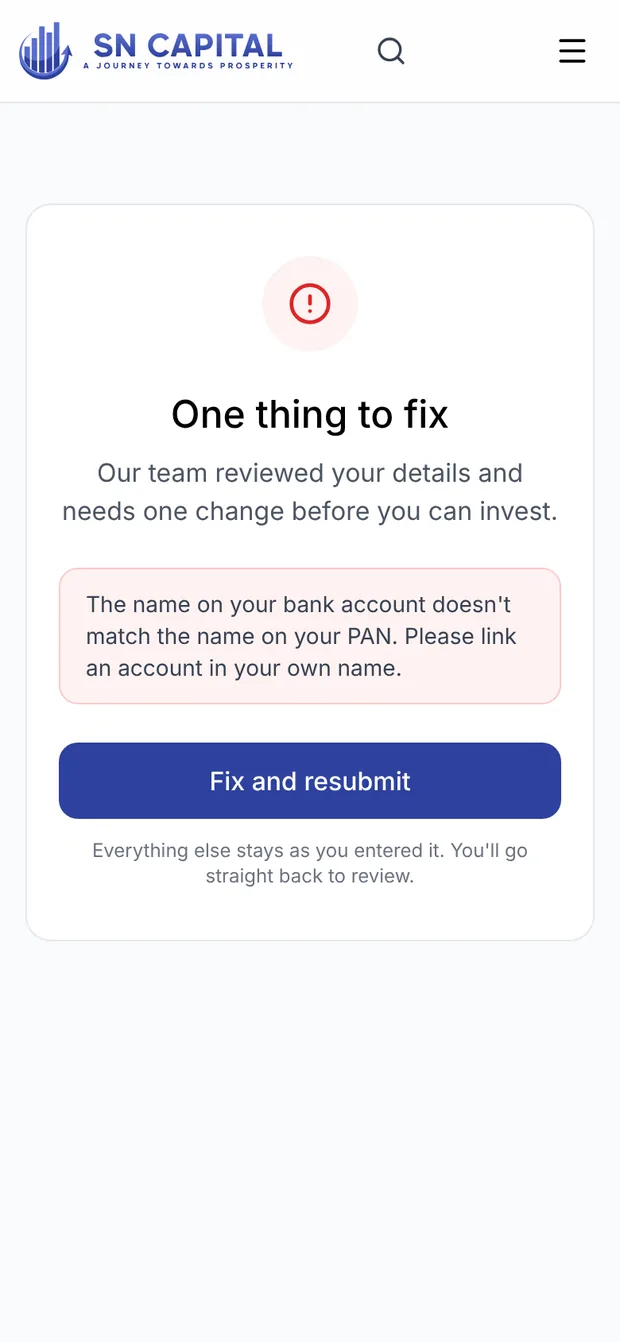
Sent back, not rejected
If something doesn't match, like the name on the bank account, the investor gets a plain reason and only that section reopens. Everything else stays filled in, so fixing it takes a minute, not a fresh start.
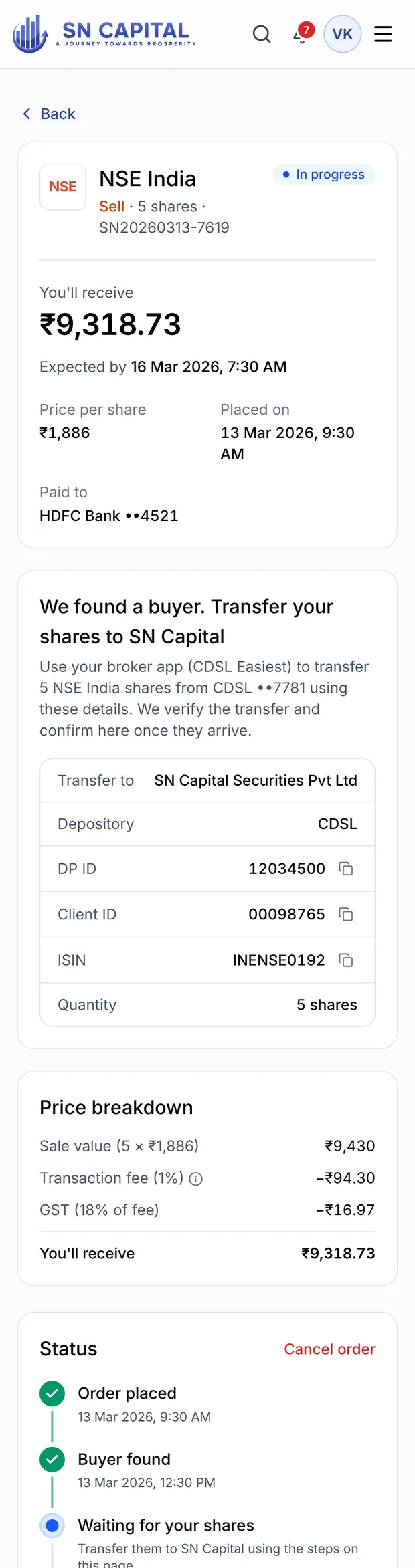
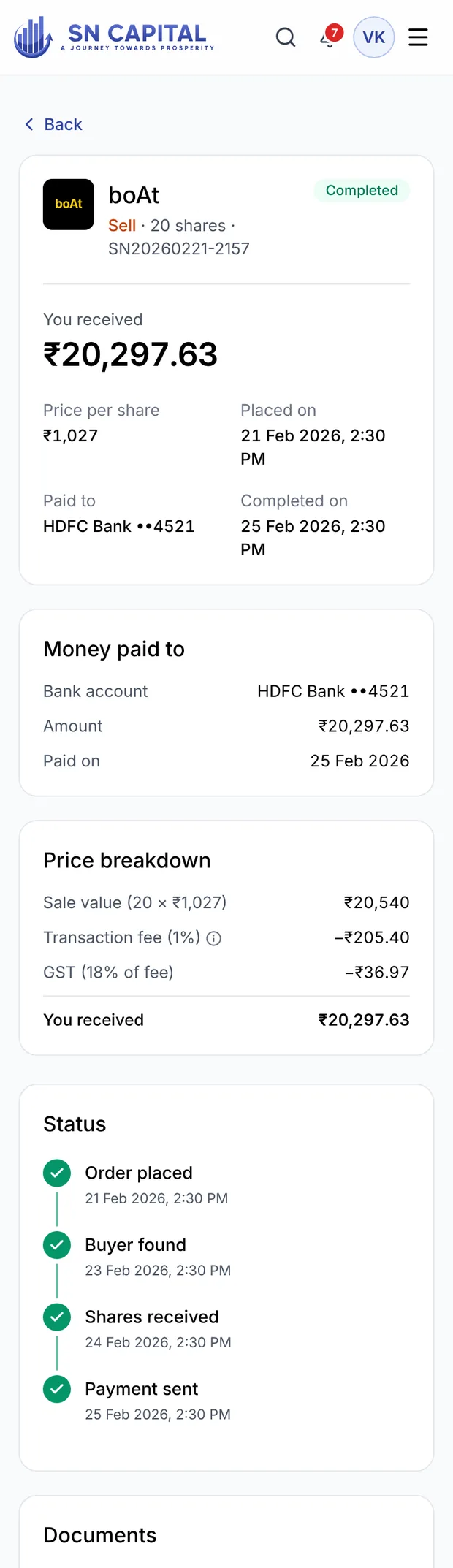
SN Capital finds the buyer. The seller always knows the next step.
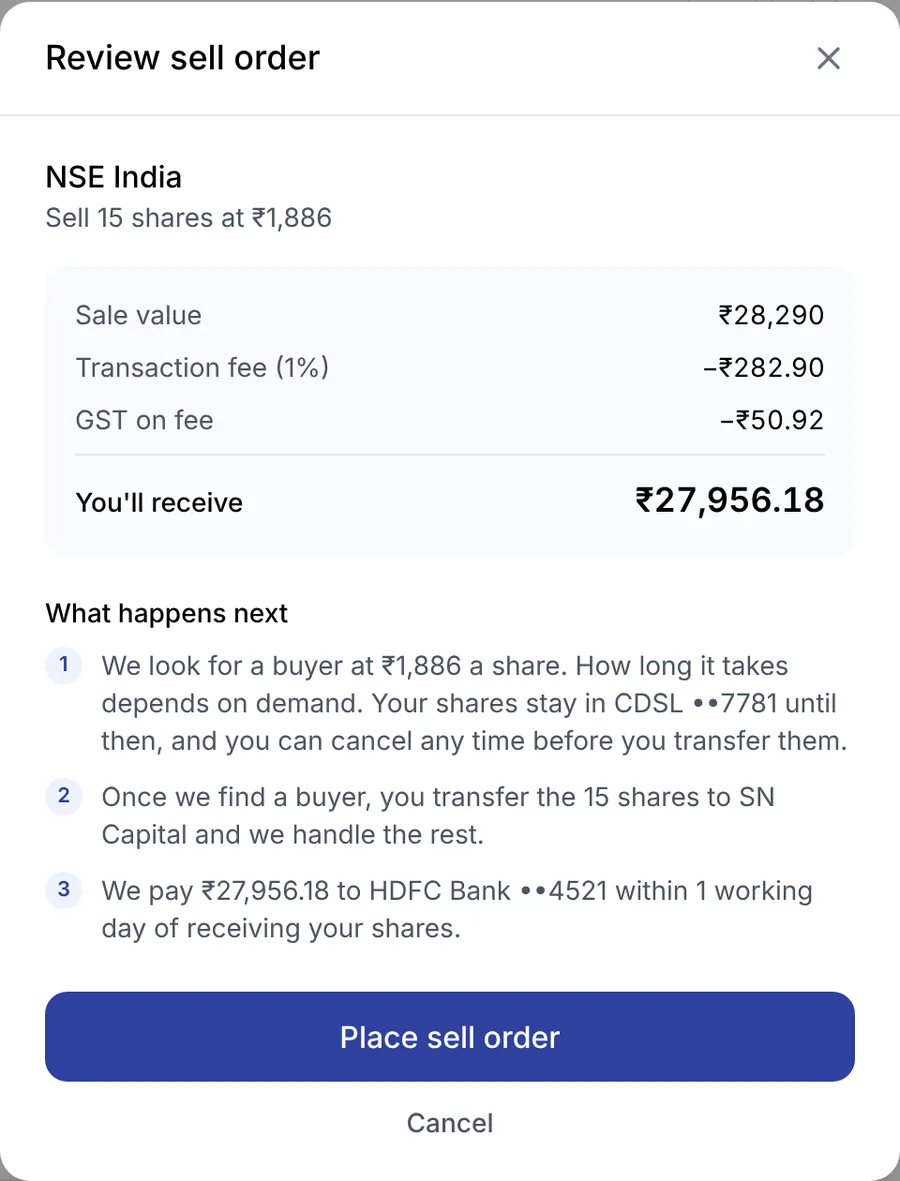
Selling was the part investors found hardest, and the one competitors left manual. SN Capital finds a buyer and handles the transfer and payment, checking each step along the way. The seller places the order, and the product tells them what to do and when.
The seller sees the sale value minus fees, and exactly what they'll receive.
How long it takes depends on demand for the company. The shares stay in the seller's own demat meanwhile.
Transfer details appear, with copy buttons, and SN Capital verifies the shares.
The money reaches the seller's bank, with a contract note.
The order stays open until a buyer is found. Until the shares are transferred, the seller can cancel.
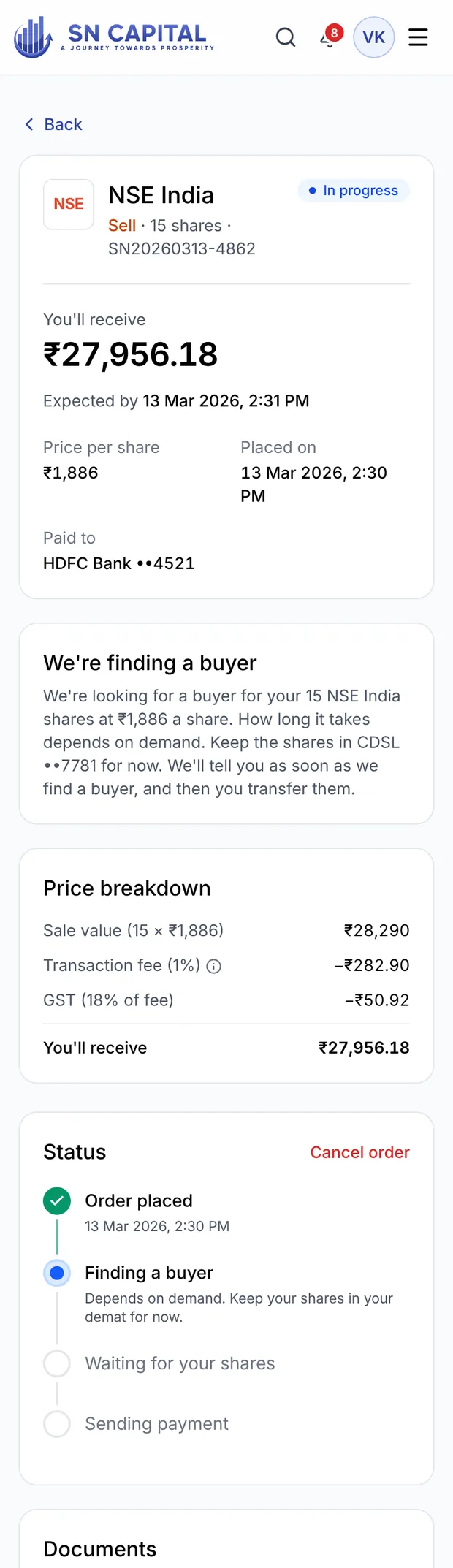
Every order answers "where is it now?"
Most of a deal is waiting, and part of it happens outside the product. The order page turns that wait into a position: what's done, what's next, who acts, and roughly when.
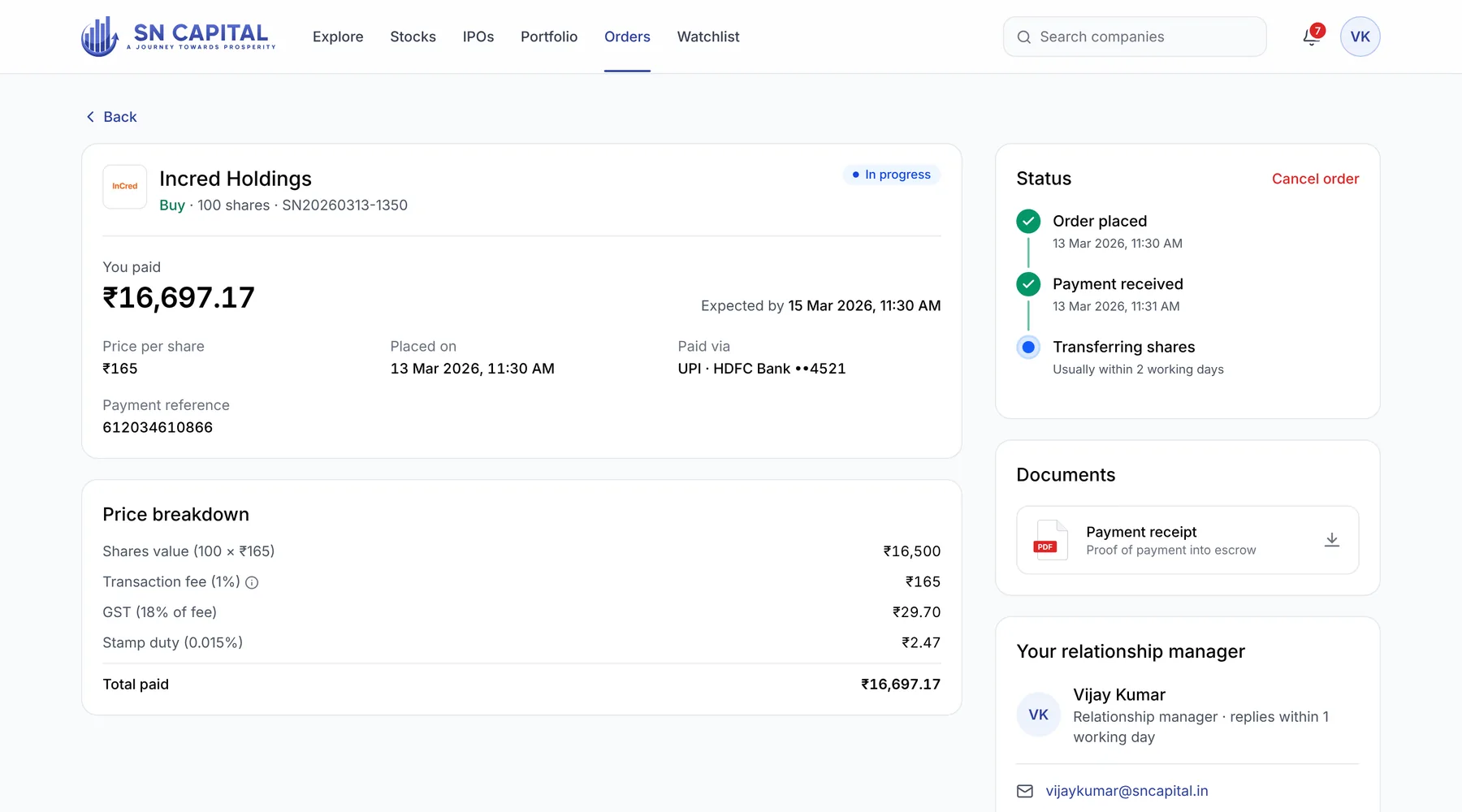
One page instead of a phone call
- A timeline with real times, and what the current step is waiting on.
- An expected date at the top, so the investor knows when to start worrying, and not before.
- Documents as they happen: payment receipt, then contract note. Refund receipts, not invoices, for failed orders.
- The RM, by name, with email and phone, on every order. The person is still there. They're just not the only way to find out.
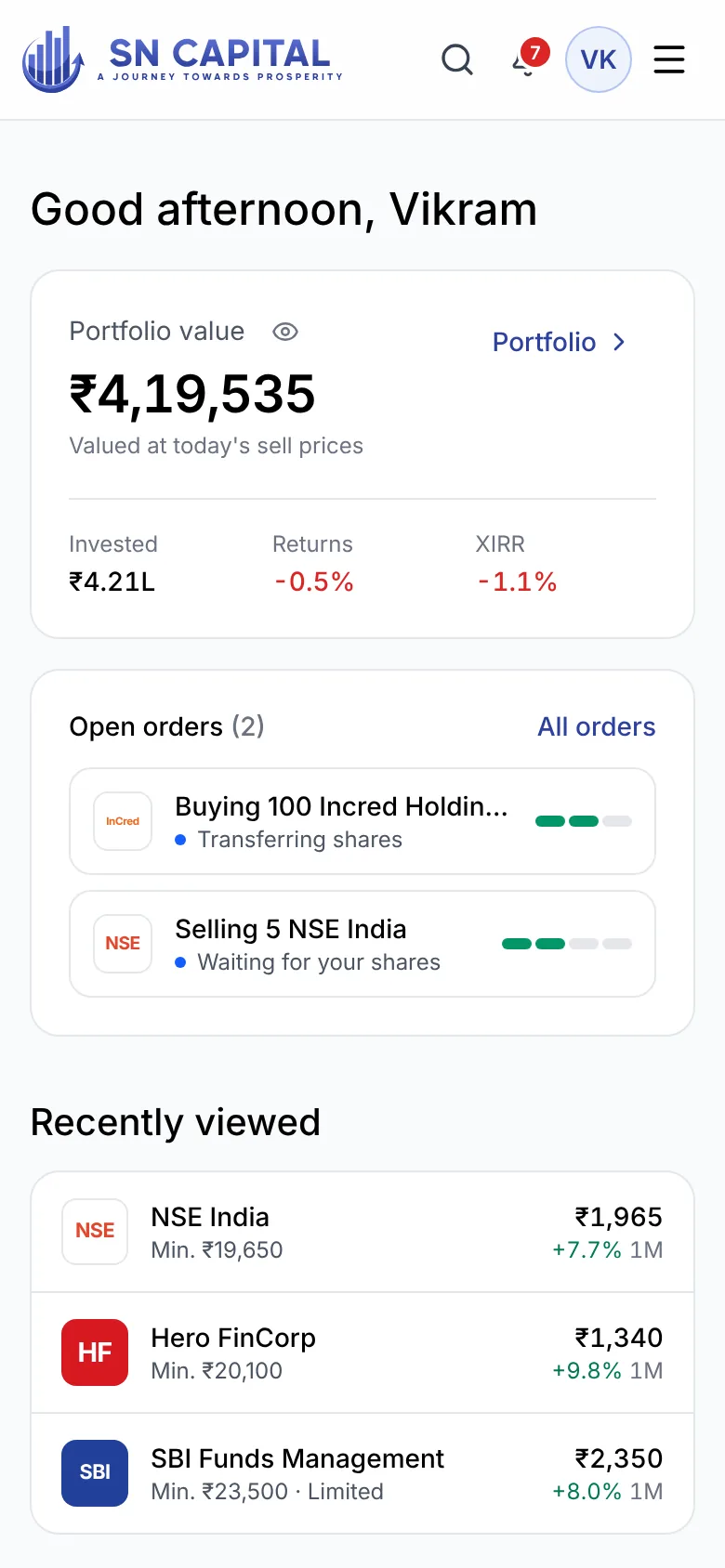
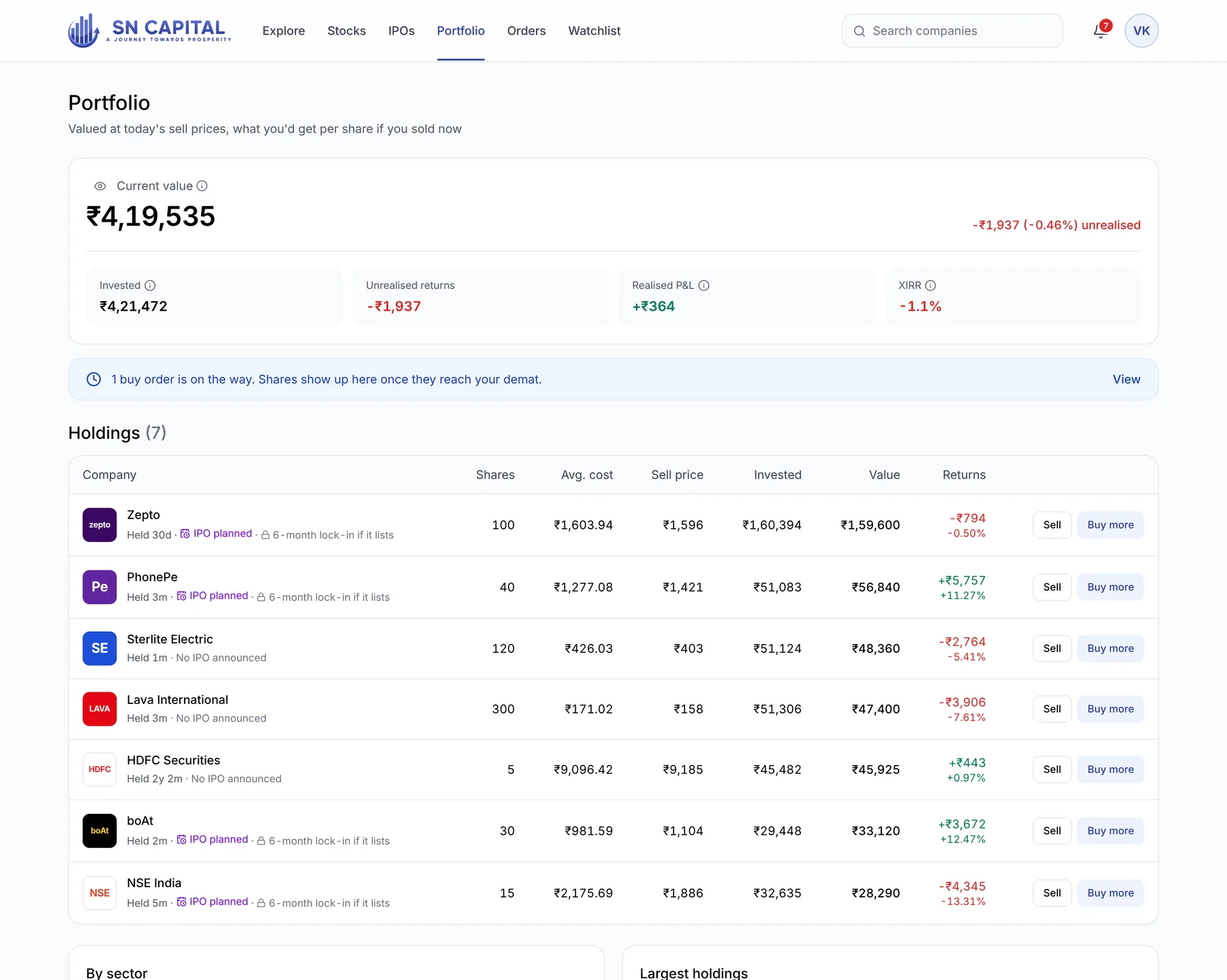
A portfolio valued honestly
- Valued at today's sell price, what you'd actually get, not the buy price. A new holding starts slightly negative, and the page explains why.
- XIRR next to returns, because unlisted shares are held for years.
- Lock-in and IPO status per holding, which matter more here than daily moves.
- Realised gains and a capital gains statement, for tax time.
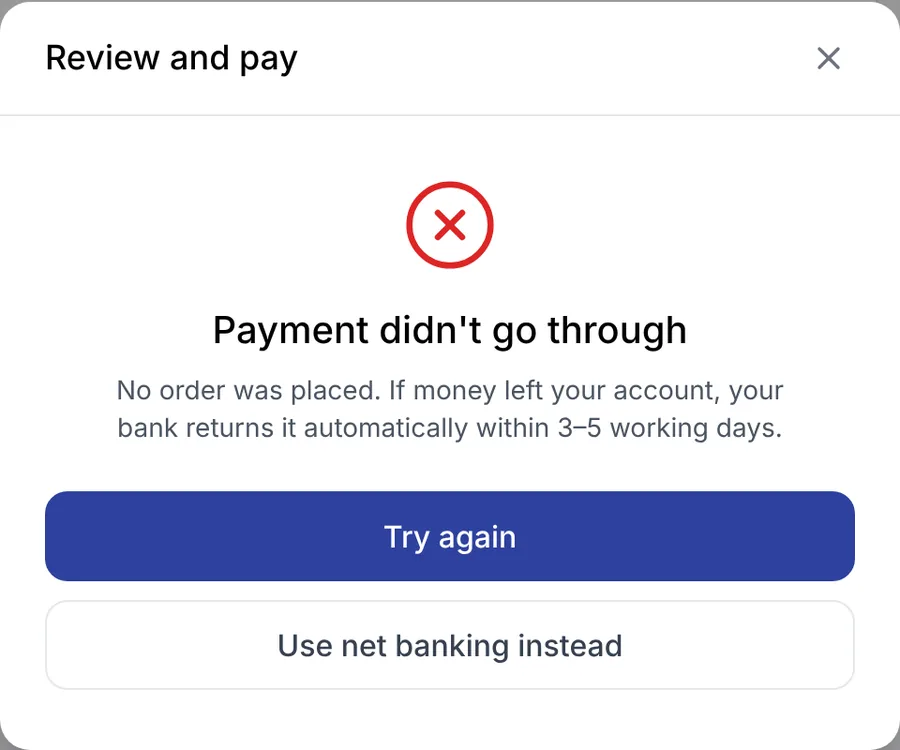
The moments where silence costs trust
With this much money involved, a vague error feels like a lost payment. Each of these says what happened and what to do next.
What changed along the way
Income and occupation are asked once, inside verification, so signing up is just a phone number.
Simplified so investors weigh up a company before committing: a clearer hierarchy and less to take in at once.
Five full-stop interruptions became inline ticks, and the flow carries on by itself.
What I didn't build
Designed, specified, in development
I handed over a Figma file with a full design system and a written spec covering business rules, every state, edge cases, responsive behaviour and a decision log.
How I'll know it worked
| What to measure | Before | What should change |
|---|---|---|
| Customers who come through the website | 1–5% | Up: the site becomes a channel, not a form |
| Deals handled by an RM by hand | All | Only the steps that need a person, like ownership checks |
| Time to complete a purchase | 3–5 days | Down: shares designed to land within 2 working days of payment |
| Checking where an order stands | RM follow-up | On the order page, without a call |
| KYC started → approved | — | Baseline at launch, then watch each step |
| Stock page visit → first order | — | Baseline at launch |
"Before" figures come from SN Capital's operations team. Before launch, I'd review the prototype with investors and RMs, focusing on the price explanation, review and pay, and the sell flow. After launch, I'd track drop-off at each KYC and order step, and repeat contact per order.
What I'd do differently
Put the prototype in front of investors earlier, especially the price explanation and the sell timeline. I leaned on the operations team's view of what investors needed. Three interviews told me a lot, but not enough to be sure how a seller feels on day four of waiting for a buyer.
What I learned
The business rules were the design. The interface got simpler each time I understood a rule better, not each time I redrew a screen.
Leaving things out took more argument than adding them. The wallet and the ticker were decisions about what SN Capital should not promise.
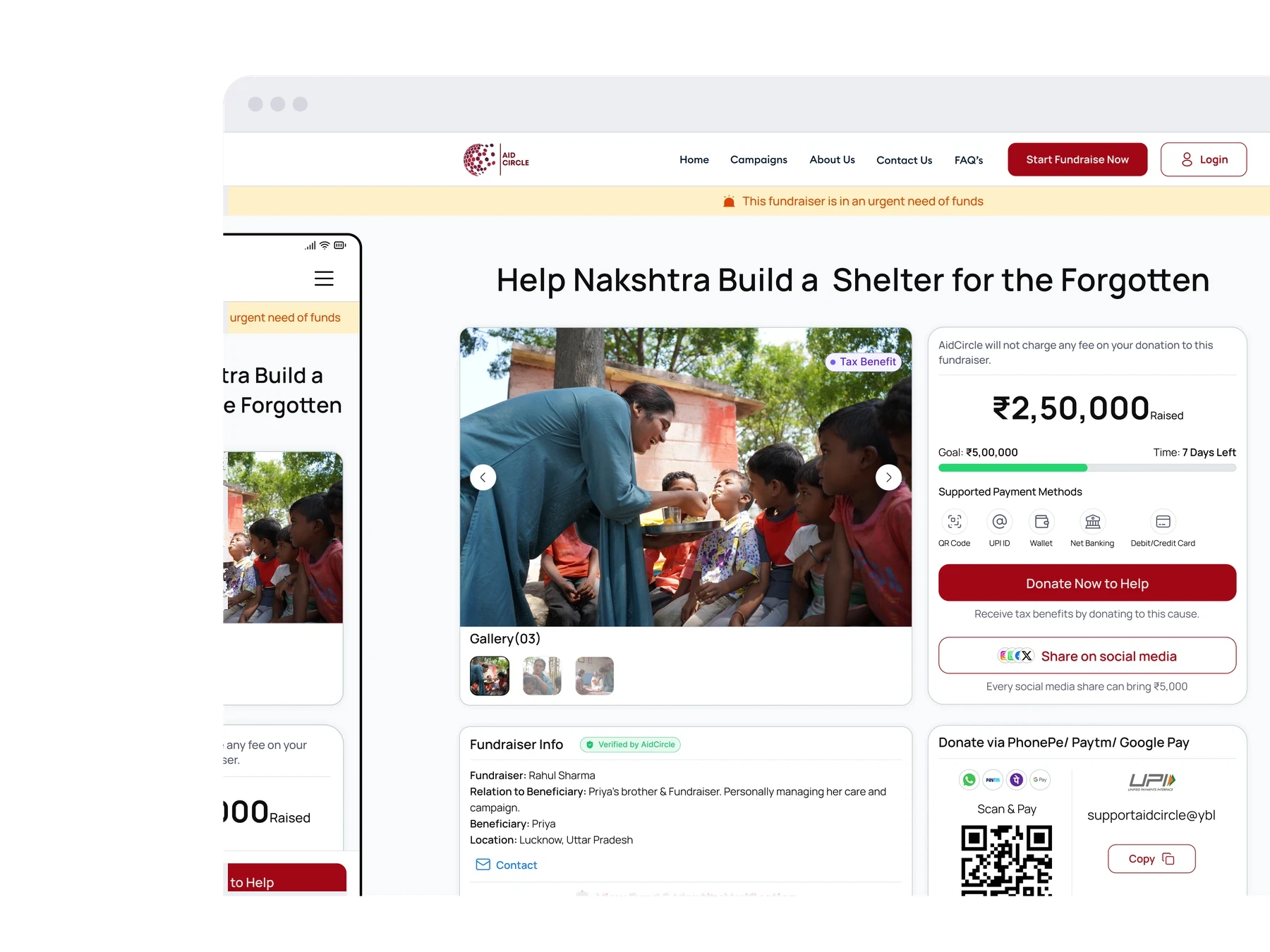
Redesigning a crowdfunding platform to increase donation conversion
A product story about turning visitors into donors. I redesigned the platform to improve conversion by building trust before asking for money, and making the donation itself quick.
- Crowdfunding
- Redesign
- Web


Found this interesting? Connect with me See all work